
Metal Roof vs Shingles in Minnesota
Shingles cost about half as much as a metal roof in Minnesota, and metal lasts about twice as long. Metal sheds snow and can carry a top hail rating, but it dents and needs snow guards over doors. Shingles cost less to patch and suit a shorter stay. Our local roofer can price both on your North Branch roof after looking at it.
Which Is Cheaper, a Metal Roof or Shingles?
Shingles are cheaper than a metal roof, at about $5.24 per square foot installed in Minnesota against $10.29 for metal on average.
Around Minneapolis, asphalt shingles run $5 to $7 per square foot installed and metal runs $8 to $12. Neither is a quote. On a metal roof, the panel type moves the price most: standing seam alone runs $7 to $30 per square foot nationally.
Installed cost, metal vs shingles
Installed, per sq ftMore on each option: asphalt shingle roofs, architectural shingles and metal roofing.
What a Metal Roof Costs on a 2,000 Square Foot Home
A metal roof costs about $15,700 to $24,700 for 2,000 square feet of roof around Minneapolis, against $9,400 to $14,800 for asphalt shingles.
Those are local figures, not a quote, and they price the roof surface rather than the floor plan. That is why the roofer measures the roof itself. Pitch, valleys, tear-off and any rotted decking all change the final number.
Want a price for both?
Our local roofer can price metal and shingles on your roof side by side. Send a few details or call (651) 427-2051.
7 Ways Metal and Shingle Roofs Differ in Minnesota
Metal and shingle roofs differ in Minnesota on cost, lifespan, snow, hail, rain noise, repairs and insurance.
Shingles win on cost and repairs, and metal wins on lifespan and snow. Most homeowners decide on the first two rows. The rest decide how the roof lives with a Chisago County winter and a summer hailstorm.
| Asphalt shingles | Metal roof | |
|---|---|---|
| Installed cost, Minnesota average | $5.24 per sq ft | $10.29 per sq ft |
| Lifespan | 15 to 20 years for 3-tab, 25 to 30 for architectural | 40 to 70 years, 50 to 80 for standing seam |
| Snow | Tends to stay on the roof | Slides off, so snow guards go over doors and decks |
| Hail | Standard shingles can crack and lose granules; Class 4 shingles resist cracking | Class 4 panels stay watertight but can dent |
| Rain noise | The usual baseline | Close to shingles over a solid deck and insulation |
| Repairs | A few shingles are easy to patch | Needs a crew that works on metal |
| Insurance | Required Minnesota discount only for a FORTIFIED roof with the hail supplement | Same rule, and panels must be UL 2218 Class 4 |
Which Lasts Longer, Metal or Shingles?
A metal roof lasts longer than shingles, about 40 to 70 years against 25 to 30 for architectural shingles and 15 to 20 for 3-tab.
That longer life is what narrows the price gap. At the Minnesota averages, metal costs about twice as much per square foot and lasts about twice as long. Class 4 impact resistant shingles usually carry a 50-year manufacturer warranty against 30 for regular shingles, but a warranty is not a lifespan. For what wears a roof out here, see how long a roof lasts in Minnesota.
Cost per year
About even
Metal costs about double per square foot and lasts about double, so the cost per year of roof life comes out close.
How Metal and Shingles Handle Minnesota Snow, Ice Dams and Hail
Metal handles Minnesota snow better than shingles because snow slides off it, but neither material stops ice dams or shrugs off every hailstone.
Snow
Snow slides off smooth metal, often in one heavy sheet, so snow guards go over doors, decks and lower roofs. Shingles hold snow in place. Chisago County homes are designed for a 50 psf ground snow load either way.
Ice dams
Ice dams form when the upper roof is above freezing while the eaves are below it. Attic heat causes that, not the roof covering. Air sealing and insulation fix it on either roof; see ice dam prevention.
Hail
Hail 2 inches or larger falls somewhere in Minnesota on 7 to 8 days a year on average. Class 4 metal stays watertight after a 2-inch test ball but can dent. Class 4 shingles resist cracking better than standard ones.
Is a Metal Roof Noisy When It Rains?
A metal roof is not noisy in the rain when it sits on a solid deck with insulation, and sounds close to shingles from inside.
Rain on a well-installed metal roof is more a muted thud than a drumbeat. Heavy rain gets louder where the insulation under the metal is thin. So the layers beneath the panels matter as much as the panels. Hail sounds much the same on metal as on other roofing.
What to ask
What goes under it
Ask about the deck, underlayment and attic insulation, not just the panel.
What Is the Biggest Problem With Metal Roofs?
The biggest problem with metal roofs is the up-front cost, about twice the price of asphalt shingles in Minnesota, followed by dents from large hail.
Most other problems trace back to the install rather than the metal. The wrong fasteners or flashing can let corrosion start. Hard cold and summer heat make the metal expand and contract, which stresses the seams. Small hail dents with the paint intact do not affect how the panels keep water out. Where paint has cracked or flaked, rust can follow, and metal roof repair or a new panel is the fix.
- About twice the up-front cost of asphalt shingles
- Thinner panels can dent in large hail
- The wrong fasteners or flashing can lead to corrosion
- Expansion and contraction in hard cold stress the seams
- Snow can slide off in one sheet without snow guards
- Some policies may not pay for dents that do not leak
Before you choose
Ask about dents
Ask your agent whether hail dents on a metal roof are covered or excluded as cosmetic damage.
Does Homeowners Insurance Go Down With a Metal Roof?
Homeowners insurance goes down with a metal roof in Minnesota only if your insurer offers a credit or the roof earns a FORTIFIED hail designation.
Minnesota requires a discount only for homes built or retrofitted to FORTIFIED standards that include the hail supplement. The threshold discounts, effective March 23, 2026, are 35% to 40% off the wind and hail part of the premium. To qualify, metal panels must carry a UL 2218 Class 4 rating. Shingles can qualify too if they rate Good or Excellent in IBHS hail impact ratings.
Outside FORTIFIED, any credit for a Class 4 metal or shingle roof is up to your insurer. State law does not address cosmetic damage exclusions either. Some policies pay for hail only when roofing is punctured or torn, which can leave a dented metal roof unpaid. Call your agent before you choose, and see roof insurance claims for how a claim works.
Required discount
35% to 40%
Off the wind and hail part of the premium, for FORTIFIED roofs with the hail supplement.
Weighing metal for your house?
Our local roofer will look at your roof and tell you which material suits it. Send a few details or call (651) 427-2051.
Does a Metal Roof Devalue a House?
A metal roof does not devalue a house, and nationally a new metal roof returns close to 60% of its cost in added home value.
Asphalt shingle roofs tend to return a higher share of their cost, mostly because they cost less to put on. So if you may sell within a few years, a new asphalt shingle roof usually gets more of its money back. If you plan to stay, the longer life of metal is where its value shows.
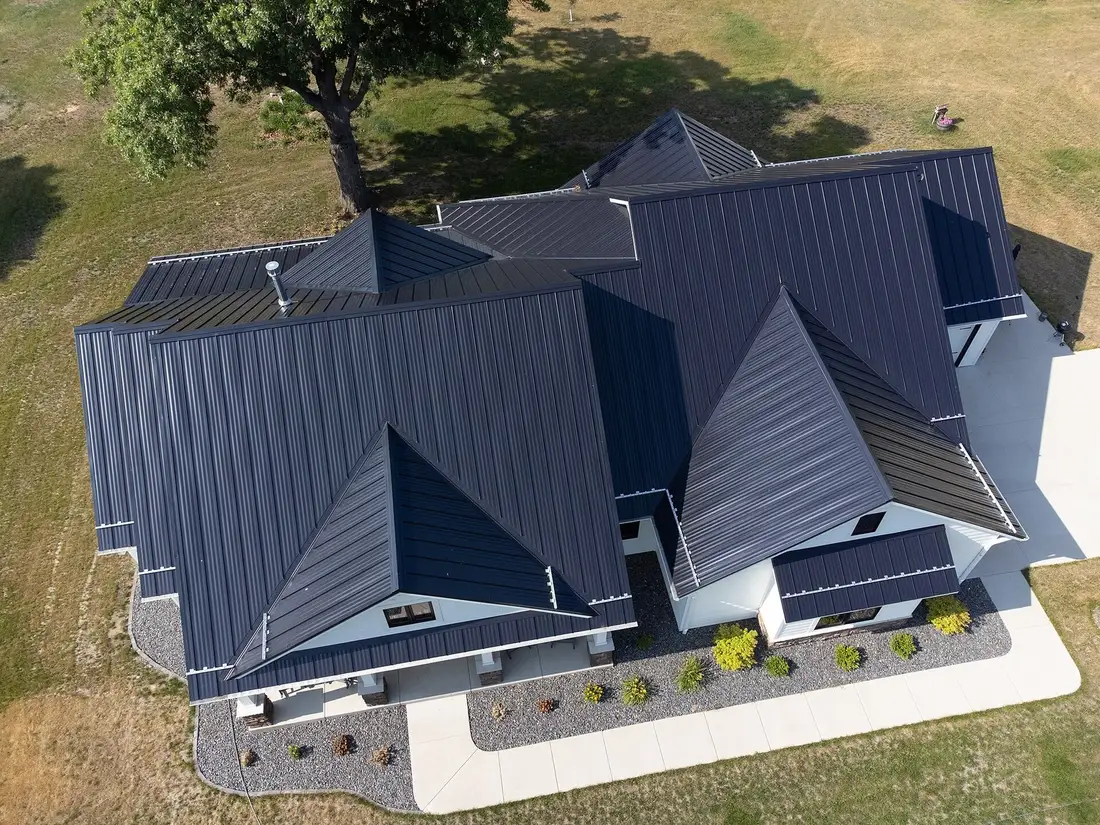
When Shingles or Metal Is the Better Choice
Shingles are the better choice for a tight budget or a sale soon, and metal is better for a house you will keep for decades.
Either way, North Branch requires a reroof permit, and the city inspects the deck at tear-off. If hail worries you but metal is out of reach, Class 4 shingles cost up to 20% more than regular shingles nationally. Our local roofer can price both options on the same roof.
Shingles make sense
- Budget is the main limit
- You may sell within a few years
- You want small repairs to be quick and cheap
- Class 4 shingles give the hail rating you need
Metal makes sense
- You plan to stay for decades
- You want the longest life, 40 to 70 years
- You want snow to shed off the roof
- There is room for snow guards over doors and decks
Questions About Metal Roofs and Shingles
What are the pros and cons of putting a metal roof over shingles?
The pro is skipping tear-off and disposal, which runs about $50 to $150 per 100 square feet nationally. The cons are bigger. Asphalt trapped under metal can hold moisture and foster mold, and nobody sees the deck. Minnesota code allows a recover only over one sound layer, and only where the metal maker allows it. A tear-off is usually the better job.
Can I put new shingles on top of old shingles?
Yes, once, if there is only one layer now and it is not water soaked or deteriorated. Minnesota code bars a recover over two or more layers. A tear-off lets the North Branch inspector check the deck and ice barrier.
Can shingles last 50 years?
Rarely. Architectural shingles last about 25 to 30 years. Class 4 shingles often carry a 50-year manufacturer warranty, but a warranty is not the same as the roof's life. For a roof that lasts 50 years or more, metal at 40 to 70 years is the realistic choice.
Will 2 inch hail damage a roof?
It can. Standard shingles may crack or lose granules. Class 4 shingles and Class 4 metal are tested with a 2-inch steel ball, so hail that size is near their limit. Metal often dents without leaking. After a big storm, see hail damage roof repair.
Get a roof estimate
Weighing metal against shingles? Send a few details and our local roofer will look at your roof and price both, so you compare the same house.
Call now (651) 427-2051 Roofing in North Branch and the towns around it