
Commercial Roofing
Our local roofer repairs and replaces commercial roofs around North Branch. Most are flat or low-slope membrane roofs over shops, offices, churches, apartment buildings and warehouses. They inspect the roof, tell you what it needs and price the job.
What Commercial Roofing Covers
Commercial roofing covers the repair, replacement and upkeep of roofs on business and other non-residential buildings, and in practice that means low-slope membrane roofs such as EPDM, TPO, PVC, modified bitumen and built-up roofing.
A commercial roof works differently from a shingle roof. Shingles shed water down a slope. A low-slope roof has to hold water out with a continuous, sealed membrane, and it relies on drains, scuppers and gutters to get water off. Most commercial roof trouble starts at the seams, the edges and the places where pipes, vents and rooftop units go through the membrane.
Our local roofer handles both commercial roof repair for leaks and damage and full commercial roof replacement when the membrane or the insulation under it is worn out.
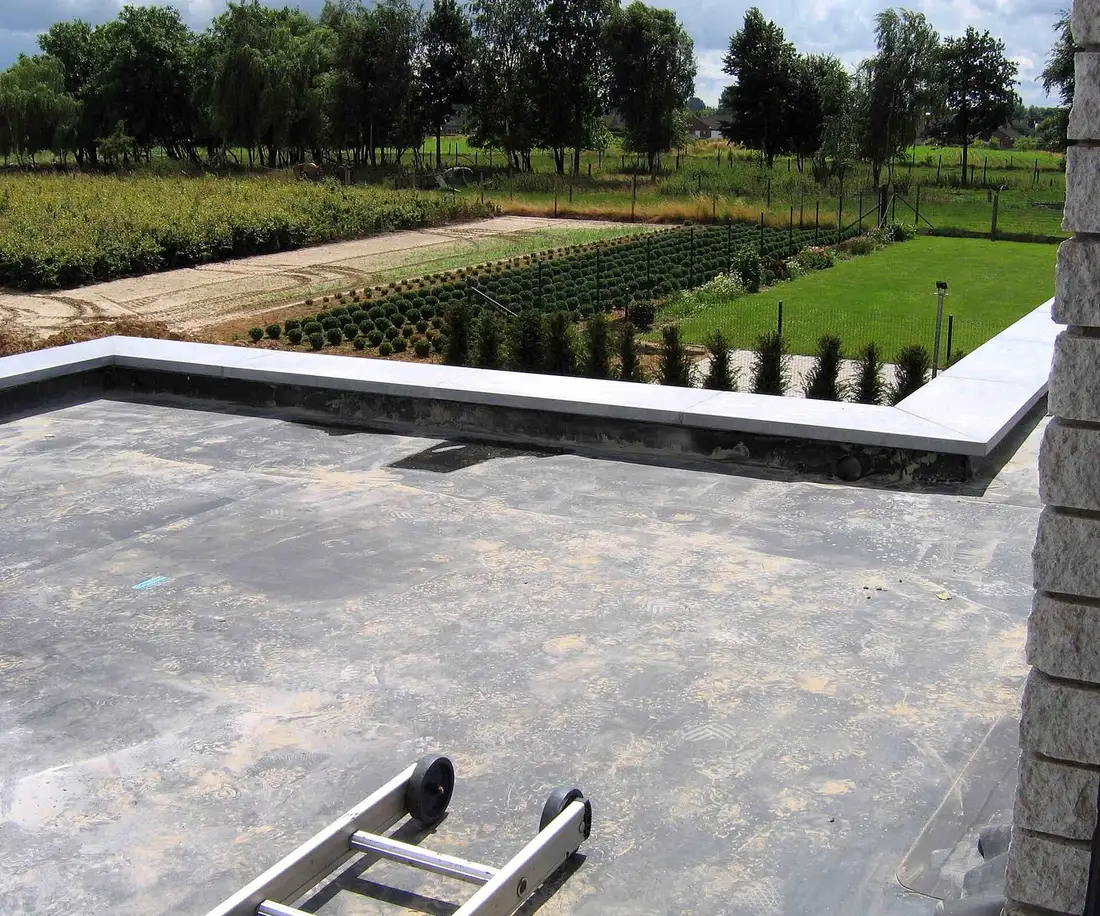
Typical systems
Single-ply and asphalt
Most commercial roofs are a single-ply membrane (EPDM, TPO, PVC) or a multi-layer asphalt roof (modified bitumen or built-up).
Which Commercial Roofing Membrane Fits Your Building?
The commercial roofing membrane that fits your building depends on the roof's size and shape, the equipment and foot traffic on it, what drains or vents onto it, and your budget, and the usual choices are EPDM, TPO, PVC, modified bitumen and built-up roofing.
Each one has a job it does well. The roofer can tell you which one is already on your roof and whether staying with it makes sense.
EPDM rubber
EPDM roofing is a black synthetic rubber sheet with glued or taped seams, a long-standing choice for plain, open roofs.
TPO
TPO roofing is a usually white thermoplastic sheet whose seams are heat-welded, widely used on new and replaced commercial roofs.
PVC
PVC roofing is a heat-welded vinyl membrane often picked for restaurants and buildings where grease or chemicals reach the roof.
Modified bitumen
A modified bitumen roof uses rolled asphalt sheets with rubber or plastic modifiers, often in two plies with a granule-surfaced cap.
Built-up (tar and gravel)
A built-up roof stacks layers of bitumen and reinforcing felt under a gravel surface, the classic older commercial roof.
Coatings
Roof coatings are liquid-applied layers that can extend the life of a sound membrane or metal roof, but they do not fix wet insulation.
What Commercial Roofing Costs
Commercial roofing costs about $4 to $16 per square foot installed, depending on the membrane. That is a national range, not a quote, and no separate price is published for commercial buildings.
Published estimates disagree on the numbers. Real commercial prices swing with roof size, how many old layers come off, insulation, drains, rooftop equipment and access. Our local roofer prices your job after seeing the roof.
Flat roof membranes, installed
Installed, per sq ft, nationalWant a real price for commercial roofing?
Our local roofer will look at your roof and give you a written estimate. Send a few details or call (651) 427-2051.
Snow and Hail Loads on North Branch Commercial Roofs
Snow and hail are the two big loads on North Branch commercial roofs: Minnesota sets a 50 psf ground snow load for Chisago County, and large hail of 2 inches or more falls somewhere in the state on 7 to 8 days a year on average.
A flat roof holds its snow instead of shedding it, so drifts next to parapets and higher walls deserve a look after big storms. Hail can bruise or puncture a membrane without obvious damage from the ground. Storms here have hit commercial roofs before: in 2009 an EF-0 tornado damaged the North Branch Middle School roof.
Does Minnesota's Residential Roofer License Cover Commercial Buildings?
No, Minnesota's residential roofer license covers roofing work on residential real estate, which state law defines as a building constructed for one to four families plus detached garages, so a commercial building falls outside that residential definition.
Our research covers the residential license only, so we do not describe what rules apply to commercial roofing work. Ask the roofer, and the city's building department, what applies to your building before work starts. North Branch City Hall is at 651-674-8113.
What we can say: our local roofer holds a Minnesota license that was checked, and you can look up any contractor yourself with the DLI license lookup.
Signs Your Commercial Roof Needs Attention
Your commercial roof needs attention when you see water stains on ceiling tiles, water that stays on the roof long after rain, seams or flashing pulling loose, blisters or cracks in the membrane, or debris clogging the drains.
Small problems on a flat roof spread sideways under the membrane and soak the insulation, which turns a repair into a replacement. If you see any of these, get the roof looked at before the next freeze-thaw season.
- Stained or sagging ceiling tiles
- Ponding water that lingers long after rain
- Open seams or loose edge flashing
- Blisters, splits or shrinkage in the membrane
- Clogged drains, scuppers or gutters
- Soft spots underfoot on the roof
Next step
Inspect first
The roofer checks the membrane, seams, flashing and drains before recommending a repair or a replacement.
Seeing these signs?
Our local roofer will look at your roof and tell you what it needs. Send a few details or call (651) 427-2051.
Commercial Roofing Services
Commercial roofing services in North Branch range from a single leak repair to a full tear-off, and these pages explain each one.
Commercial Roof Repair
Leaks, seams, flashing and storm damage on business roofs.
Commercial Roof Replacement
Tear-off or recover, and what it costs.
TPO Roofing
White, heat-welded single-ply membrane.
EPDM Roofing
Black synthetic rubber membrane.
PVC Roofing
Heat-welded vinyl membrane.
Roof Coatings
Liquid-applied restoration for sound roofs.
Commercial Roofing FAQs
What is the most common commercial roofing material?
Single-ply membranes such as TPO, EPDM and PVC are the usual choices for low-slope commercial roofs, along with modified bitumen and older built-up roofs. The roofer can tell you what is on your building now and whether to stay with it.
How long does a commercial flat roof last?
Roughly 15 to 30 years, depending on the membrane and the estimate. EPDM lasts up to 30 years, TPO and PVC 20 to 30, modified bitumen about 20 and built-up 15 to 30. Another estimate gives flat roofs in general 15 to 20 years.
Is a residential roofer license enough for my commercial building?
The residential roofer license is written for one- to four-family buildings and detached garages, so commercial buildings fall outside that definition. We have not researched commercial licensing rules, so ask the roofer and your city building department what applies.
Can a commercial roof be repaired instead of replaced?
Often, yes, if the leaks are local and the insulation underneath is dry. Once water has spread through the insulation or the membrane is failing across the roof, replacement usually makes more sense.
Do you set the price for commercial roofing?
No. We are a referral service. The independent roofer inspects the roof and prices the job. Our cost figures are national ranges, not a quote.
Get a commercial roofing estimate
Tell us about the building, the roof type if you know it and what you are seeing. Your request goes to our local roofer, who arranges a look at the roof and prices the work.
Call now (651) 427-2051 Roofing in North Branch and the towns around it