
Can You Put New Shingles Over Old Shingles in Minnesota?
Yes, but only once. Minnesota code allows one new layer of shingles over one old layer that is dry and sound. The shingle maker's instructions have to allow it too. A roof that already has two layers must come off down to the deck. In North Branch, any reroof needs a city permit, and the city inspects the bare deck after tear-off. Our local roofer can tell you how many layers your roof has and whether an overlay is worth doing.
How Many Layers of Shingles Does Minnesota Allow?
Minnesota allows two layers of shingles on a roof at most, which means one overlay on top of a single existing layer. The code bars any new roof covering over a roof that already has two or more layers. North Branch applies the same limit: two layers of asphalt shingles in total, then a tear-off is required.
A second layer is allowed, not required. Some Minnesota cities, Forest Lake and New Prague among them, require every asphalt shingle reroof to be torn off. Once a roof has two layers, the next job is a full roof replacement down to the deck.
The limit
2 layers
One layer now means one overlay is still allowed. Two layers means the next roof starts with a tear-off.
3 Times Minnesota Code Rules Out an Overlay
Minnesota code rules out an overlay over a soaked or worn-out roof, over slate or tile, and over a roof that already has two layers. In each case the old roofing comes off before new shingles go on.
Worn out means the old roof is no longer a fit base for new roofing. Shingles that are warped, curled or badly weathered will not give the new layer a flat surface, so they should come off. Over wood shakes, an overlay that leaves a hidden gap that could burn needs gypsum board or a similar approved material laid down first.
- The old roof is water soaked, or so worn it cannot carry new roofing
- The old roof is slate, clay tile, cement tile or asbestos-cement tile
- The roof already has two or more layers of any roof covering
Also required
Maker's instructions
Where code does allow an overlay, the new shingles still have to go on the way their maker's instructions say.
Not sure if your roof can take another layer?
Our local roofer will count the layers and check the deck. Send a few details or call (651) 427-2051.
What North Branch Requires to Reroof a House
North Branch requires a building permit to reroof a house, plus two city inspections: one at tear-off and a final one. The homeowner or a contractor licensed by the State of Minnesota can pull the re-roofing permit, and the fee is due when you apply. If a contractor pulls it, check their Minnesota license first.
The city's process is built around a tear-off, because the first inspection looks at bare decking. If you are weighing an overlay, ask the building department how it will be inspected before you sign a contract.
- 1
Permit application
Submit a building permit application to the city and pay the fee. You or a licensed contractor can apply.
- 2
Tear-off inspection
With the old roof off, the inspector checks the decking and the ice and water barrier, which must reach 24 inches past the exterior wall. Book it at least 24 hours ahead.
- 3
Final inspection
The inspector comes back once all roofing and flashing are in place.
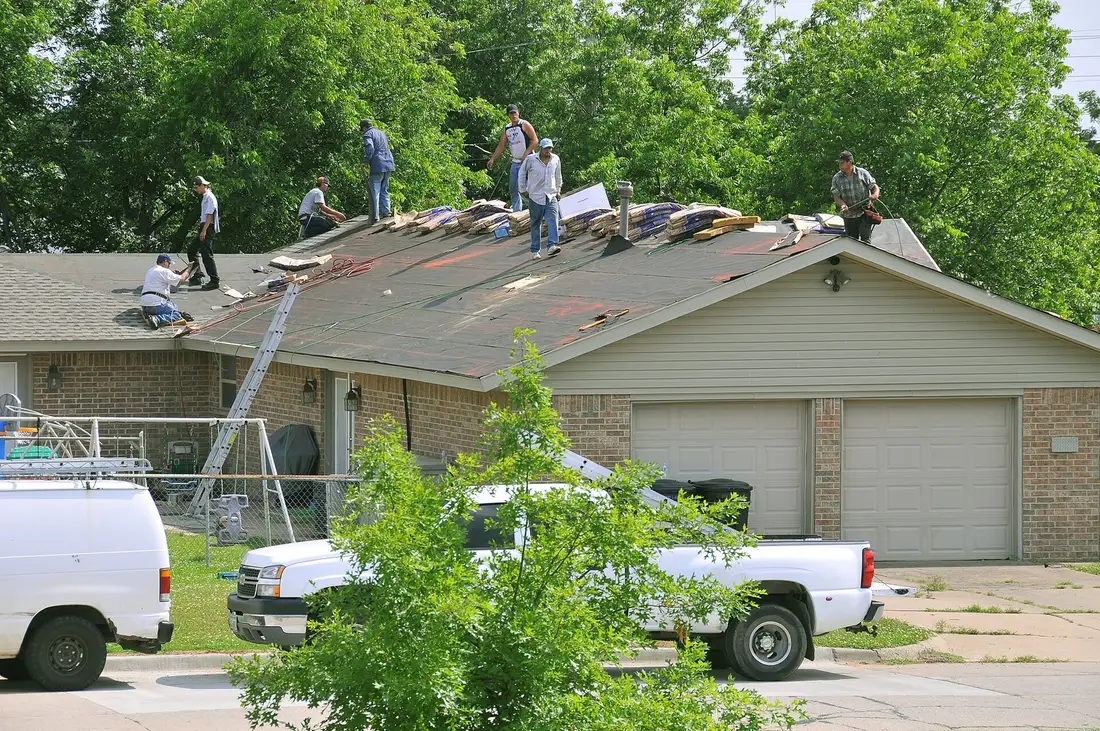
Pros and Cons of an Overlay vs a Tear-Off
An overlay saves the tear-off bill; a tear-off exposes the deck, puts ice and water shield on bare wood and sheds weight.
Tear-off and disposal run about $50 to $150 per 100 square feet nationally. On a 2,000 sq ft roof, skipping it saves roughly $1,000 to $3,000, which is a national figure and not a quote. Against that, any rot in the deck gets roofed over, and the next reroof has to strip both layers.
Code allows a shingle overlay when it follows the shingle maker's installation instructions, so check those and the warranty terms before you choose one. Some roofing companies will not warranty their own work on an overlay at all.
| What changes | Overlay | Tear-off |
|---|---|---|
| Removal and disposal | None | About $50 to $150 per 100 sq ft, national |
| Rotted decking | Stays hidden under the old shingles | Found and replaced, about $2 to $8 per sq ft, national |
| Ice and water shield | Old shingles still cover the eaves, so there is no bare deck for it | Laid on bare deck and checked at the North Branch tear-off inspection |
| Weight on the framing | Adds a second shingle layer, about 2.4 to 3.2 lb per sq ft | Old layer is removed |
| Next reroof | Must be a full tear-off | One overlay is still allowed |
| Shingle maker's instructions | Must allow an overlay | Installed on a bare, inspected deck |
If the deck may be soft, see roof decking replacement. A second layer to strip also adds time; see how long a roof replacement takes.
Want both options priced?
Our local roofer can price an overlay and a tear-off on your roof. Send a few details or call (651) 427-2051.
Can You Shingle Over Ice and Water Shield?
Yes, you can shingle over ice and water shield, because it is made to go under the shingles as the first layer at the eaves. Minnesota requires it on every home, from the roof edge to at least 24 inches inside the exterior wall.
On a reroof, old ice and water shield stuck to the deck may stay, covered with a new layer of membrane. With an overlay, the old shingles still cover the eaves, so new membrane cannot reach the deck there without stripping them. The rules for new roofing, ice barrier included, apply to an overlay too. More on the membrane itself: ice and water shield.
Before an overlay
Eaves first
Ask how the eaves will get new ice and water shield before you agree to shingles over shingles.
Pros and Cons of Putting a Metal Roof Over Shingles
Putting a metal roof over shingles saves the tear-off and adds little weight, but the shingles must be sound and the deck stays hidden.
Metal weighs about 0.8 to 1.5 pounds per square foot, against 2.4 to 3.2 for a layer of shingles. Most roof trusses are designed for a total dead load of about 10 pounds per square foot, so the framing usually has room. Metal counts toward the two-layer limit like any other roof covering. A standing seam system that carries its load straight to the framing is treated differently: the code does not require the old roofing removed under it. Ask the city how that applies to your roof.
The panels usually sit on underlayment and wood strips over the shingles, not straight on them, which avoids dimpled panels and sealing problems. Synthetic underlayment is preferred, because felt can bleed asphalt and stain the metal. For types and prices, see metal roofing, and for the wider comparison, metal roof vs shingles in Minnesota.
Pros
- No tear-off and disposal bill
- Light: about 0.8 to 1.5 lb per sq ft
- Most framing carries it without added support
Cons
- Damaged, split or waterlogged shingles must come off first
- Rotted decking stays hidden
- Uses up the second layer the code allows
- Needs underlayment and wood strips over the shingles
What Is the 25% Rule in Roofing?
The 25% rule in roofing is a Florida code threshold: past 25 percent of a roof section in 12 months, repair becomes replacement. When more than a quarter of a roof section is repaired, replaced or recovered within a year, the whole section must meet current code.
Insurers there apply it when deciding whether a storm claim pays for a repair or a new roof section. Florida has since eased it, so a roof built to its 2007 code or later only needs the repaired part brought up to current code.
Minnesota has no 25 percent rule in its residential code. Its reroofing rules are the two-layer limit and the tear-off requirement instead. After storm damage, how much of the roof gets replaced depends on your policy. Under Minnesota law, replacement cost coverage pays only for the damaged part in a partial loss unless the policy promises more. That coverage must also pay for repairs that meet the minimum code. See roof insurance claims and roof repair.
In Minnesota
No 25% rule
Read the roof section of your policy, or ask your agent, how a partial roof loss is settled.
What to Read Before Choosing an Overlay or a Tear-Off
Before choosing an overlay or a tear-off, read about the deck under your shingles, the membrane at the eaves and how long a full replacement takes.
Questions about shingle overlays
What will fail a roof inspection?
In North Branch, the tear-off inspection looks for decking that is not solid and ice and water barrier short of 24 inches past the exterior wall. At the final, all roofing and flashing must be in place. Asphalt shingles are not allowed on slopes under 2:12.
Can you repair just part of a roof?
Yes, when the damage is confined to one area, such as flashing or a few torn shingles. A typical roof repair costs about $400 to $1,900 nationally, which is not a quote.
How long does it take to replace a roof on a 2000 square foot house?
About two to four days of work, based on national figures. Stripping a second layer of old shingles adds time. See how long a roof replacement takes.
How bad is a 20 year old roof?
It depends on the shingle. A 20-year-old 3-tab roof is at the end of its usual 15 to 20 years, while architectural shingles often last 25 to 30. A worn roof cannot take an overlay, so condition decides.
Get a roof estimate
Not sure whether your roof can take an overlay? Send us the details and our local roofer will count the layers, check the deck and price the job.
Call now (651) 427-2051 Roofing in North Branch and the towns around it